Showing posts with label Architecture. Show all posts

20 May 2015

Stroganov Moscow Design and Applied Arts State Academy

Recently I joined the group tour to the oldest Applied arts academy in Russia, which is  located in northwest Moscow near our flat.  "Stroganov Moscow Design and Applied Arts State Academy", it was originally founded in 1825 by Count Sergey Stroganov(1794-1882) – a member of a noble Russian family due to demands of national culture and social economic development.  For the first time, the academy was specializing in drawing for arts and crafts, later it was reorganized and renamed several times, and in 1945 was reopened as a higher art educational institution. In its history, famous Russian artists such as M. Vrubel, V. Kandinsky, A. Rodchenko contributed a lot to a unique tuition system.

ちょっと珍しい見学ツアーで、ロシアで最も歴史のある応用美術学院を訪れました。モスクワ市北西部「Stroganov Moscow Design and Applied Arts State Academy」です。我が家から遠くないので、以前から通りがかっては気になっていた建物です。ロシア貴族ストロガノフ家のセルゲイ・ストロガノフ氏(1794-1882)が、1825年に国内の文化振興の一環として設立しました。工芸美術に特化したデッサン学校としてスタートしたのち、組織変更や名称変更をくり返し、1945年に美術高等教育機関として体制が整えられました。その歴史上、かの有名なロシア人芸術家カンディンスキー、ロドチェンコ、ヴルーべリも教鞭をとったといいます。


Stroganov Moscow Design and Applied Arts State Academy, founded in 1825

The founder Sergey Stroganov

Today Stroganov Academy has 3faculty( Design,  Monumental and Decorative Applied Arts, restoration) and 17departments (interior, furniture,textile, transport, industrial, environmental, graphic, metal, ceramic glass, restoration, and so on).  It was relocated to its present site in 1945, school building already got aging and needs to be fixed everywhere. However those old things like trembling lifts or faded walls rather inspire students' creation. We walked though the labyrinth-like corridors that were occupied with students' works. Talented young artists concentrated on their works even in chilly corridors.

現在はデザイン、応用美術、修復の3学部と、17の専門学科(インテリア、家具、テキスタイル、乗り物、工業、環境、グラフィック、美術史、モニュメント彫像、金属、セラミック、ガラス、修復、etc)に分かれます。旧校舎は1945年設立、カタカタと震えながら動くエレベーターはもはやアンティーク。所々剥げ落ちた内装は、生徒の創造欲をいっそうかき立てるようです。迷路のような校内に生徒の作品がところ狭しと置かれ、5月にしては寒い冷え切った廊下で、彼らは一心に作品づくりに取り組んでいました。
Academic Sculpture department

Aged lifts paintd by students

Stairs painted by students
 
Wall painting copies 
 Hermitage Raphael loggias.
 
The most Russianlike and the most delicate work would be the restoration of icons. Icons are made of several layers of paintings. The first couple of layers are invisible, so that conservator find them out by X-ray photos. The workroom is filled with chemical smells, because they clean away dust on surface by professional chemical liquid, and paint it again by special pigments. It is no doubt that this work takes for ages.

最もロシアらしく、最も繊細な仕事はイコンの修復でしょう。イコン画は幾層にも重なるレイヤーで描かれており、下の層はレントゲンで確認しながら再現するそうです。作業室に入ると薬品の匂いが充満していました。特殊な薬液で表面の汚れを落とし、特殊な顔料で細かく色づけする気が遠くなるような作業です。
Icon restoration department

Repaint works for old icons

The academy opens the museum and expositions for visitors. This Russian oldest applied arts museum was founded in 1864, maily the collection of foreign arts and crafts.  Studens come here to draw masterpieces or hold work shops at the table.

校内の美術館や展示会は、学外の訪問者を受け入れてくれます。
1864年設立の美術館は、主に国外工芸品を集めたロシア最古の応用美術博物館。生徒たちは展示されている工芸品を見ながら、テーブルでデッサンしたりワークショップを開くそうです。

Russian oldest applied arts museum in school.

The work place for students

Plates designed by V. Kandinsky who contributed the tuition system

Currently a unique exhibition has just started "Trasformation of Submarine", it shows the excellent presentations among international competitions. The theme is how to reuse the giant submarine which was made in Soviet era.  It seems such unreal projects, but actually 3 soviet submarines exsit somewere in Russia and some years ago the goverment announced that they would be reused for something. Unfortunatelly this plan has been freezed because of shortage of money, thus it is quite interesting project in terms of social impacts and lot of young designers took part in it.

ちょうど今、ユニークな展示会も行われています。「Trasformation of Submarine」、ソビエト時代の巨大な潜水艦の再利用法を提案するプレゼンテーションです。会場には優秀作品が展示されていました。夢物語のようですが、実際ロシアには3隻の潜水艦が存在し、政府は過去にそのうち2隻を再利用することを示唆したそうです。今のところ資金不足で実現されていないために、このような社会プロジェクトが生まれ、多くの若手デザイナーが参加している点は興味深いです。

Exhibition in Shool,  "Trasformation of Submarine"


To enter this academy is not that easy, the school stuff said that the exam preparation takes at least 2 years. Basically school fee is free except foreign students. All students in any specialization has to learn drawing for a long term, after then they learn particular techniques. This method seems even old-fashioned, but I think this is how Russian's artistic soul is.
 It was such a nice day tour, I was inspired a lot by students who were making all efforts on their creative work.

Academyへの入学は難しく、試験準備に2年はかかるとのこと。ただし入学できれば学費は無料です。例えどのような学科でも、基本のデッサン修行に最も長い時間が充てられるといいます。ロシアらしい昔ながらの芸術魂を感じます。キャンバスを前にした、生徒さん達のひたむきな姿に刺激を受けた一日でした。


Stroganov Moscow Design and Applied Arts State Academy
http://mghpu.ru/


12 Dec 2014

My impression of Yaroslavl

About a month ago, I visited Yaroslavl city located northeast about 260km from Moscow. Around that area, several old towns are dotted and this collection is named "The Golden Ring" . To study Russian history, the Golden ring is very important, because it tells us the origins of Russia before Mongolians invasion in 13th century. Yaroslavl was officially founded in 1010 along the river Volga, developped by trading and became the biggest industorial city in the golden ring. Usually when I make a plan for a trip, I prefer a small quiet town. Yaroslavl city seemed not my taste, perhaps too big. However I have been interested in this city, because I see it every day in 1000ruble bills. Besides, Yaroslavl has a peculier state symbol, the bear holding an ax.
もうひと月ほど前になりますが、地方都市ヤロスラヴリを訪れました。ヤロスラヴリはモスクワより北東約260km、「黄金の輪」とよばれる古都群のひとつ。13世紀のモンゴル軍進入以前、12世紀ごろまでのロシア史を探る上で重要な一帯です。ヤロスラヴリは創設1010年、ヴォルガ川沿い交易の要所として発展し、「黄金の輪」の中でも最大工業都市です。私は個人的にちいさな観光地が好きなので、ヤロスラヴリはちょっとテイストが違うな・・とは思っていました。・・でも毎日見ている1000ルーブル札に登場する場所、そして州紋章の「熊さん」に惹かれて行ってみたくなったのです。
Provincial symbols is the bear and the halberd
In legend, Yaroslav the wise killed the holy bear before founding the city
 
After 4-hour- journey by train, there we saw the Kotorosl river flowing into the Volga river in Yaroslavl. Along the Kotorosl river, I found the lovely church with green domes, and just next to the church, there was the ugly factory with the smoking high chimney. This is Yaroslavl, the city of History and Industory.
さてモスクワより電車で4時間、見えてきました、コータラスリ川!ヴォルガ川と共に街を囲む川です。川沿いには緑屋根がすてきな教会、でもその真横には・・・・工場と白い煙を吐き出す煙突。歴史と発展が交差する街、ヤロスラヴリ

The view from the train when we almost arrived in Yaroslavl.
The beautiful church and the Soviet style factory stand along the Kotorsl river.

The city centre is quite small and comfortable for taking a walk, especially the pedestorian street and the greenery walkway along the river. The centre of tourist place is definitely the Spaso-Preobrazhensky Monastery (founded in 12c), the oldest architecture in Yaroslavl. In the pictures, we often see the city view from its bell tower and the unsual spiky golden decorations on the roof. If you walk around the city, you would be surprised at the numbers of churches. I found another church every 2 minutes.
街の中心は小さいながらも、歩行者天国や河畔の散歩道はよく整備され、そぞろ歩きが楽しめます。観光の中心は、最古の建築、スパソ・プレオブラジェーンスキー修道院(12世紀創設)。鐘楼より見下ろせる街の風景と、屋根上のトゲトゲの装飾が、ヤロスラブリの代表的な景色として有名です。また実際街を歩いて驚くのは、大小さまざまな教会の数。2分も歩けば、つぎの教会が見えてきます。
The Spaso-Preobrazhensky Monastery

Church of Elija(1647-1650)
The rebuilt Church of Maria(2010)
and the monument of Holy Trinity
 

Dozens of churchs exist in Yaroslavl


By the way, where is the church that we see in 1000ruble bills?  Actually you've already seen it in my pictures. Yes, it was the church stands riverside next to the factory, St.John Baptist church(1671-87) At last I arrived at the church and got a great impression of the beautiful Yaroslavl style architecture. It is featured "the thick brick decorations" and "the multicolored tiles". Especially the exterior decorations around the window flames and the doors are amazing. I can't even imagine how long the masters spent time to complete this work.
ところで、あの1000ルーブルに描かれている教会って、いったいどこにあるのでしょう?実はもう写真に登場しています!最初に見た工場隣の素敵な教会だったのです- St. John Baptist church(1671-87) この教会にたどり着き、ヤロスラヴリに残る美しい建築様式に気づいたときは、静かな感動を覚えました。それは「重厚なレンガ装飾」と、「彩色タイル」。とりわけ窓枠やドア周辺の装飾は、一つ一つのパーツがたいへん手が込んでおり、職人の作業を想像すると気が遠くなります。

1000ruble bill and St. John Baptist church(1671-87)
The details of St. John Baptist church(1671-87)

Interior of St. John Baptist church

In Yaroslavl, the ceramic tile already appeared in 5-6th century, but it became popular business in 17th century. At that time, some marchants often took a business trip to  the central Asia such as Bukhara and Samarkand and got inspired by luxurious ceramic decorations of mosques. Later they promoted the masters to create beautiful tiles as a fashion element of architecture. Therefore, Yaroslavl tile has a great variety of colors and design patterns. Each pattern symbolizes the special meaning from Russian poems or folk tales.  For example, unicorn - prosperity, nightingale - youth, bird Sirin - Motherhood and bird of paradise - a dream of a bright future. These tiles are often seen at the church in the city centre.
ヤロスラヴリでの「彩色タイル文化」は17世紀ごろ花開いたそうです。交易が盛んだったヤロスラヴリでは、商人が中央アジア諸国と行き交う間にモスク装飾に影響され、タイル事業を推し進めたと考えられます。独特の多色使い・デザインパターンには、ロシアの詩や民話に由来する特別な意味があるとか。たとえばユニコーン=繁栄 ナイチンゲール=若さ、ロシア神話の人面鳥=明るい未来。彩色タイルは、市中心の教会でもたくさん見ることができます。
Bogoyavleniya church(1693)
Awesome tile work of Bogoyavleniya church

Tile decoration of St. Ilijah church
Since 2005, the historic part of the city has been on the list of UNESCO world heritage, however it is pity that some historical sites doesn't look nice because of  the careless preservation. In my personal impression as a foreigner, some of attractive spots are still hidden behind the industrial development.  For example, I saw the city founder, Yaroslav's monument is trapped by too many electric wires,  noisy traffic signs stand just in front of historic buildings, Soviet style factory is located next to the ancient church( it is another heritage from Soviet era though). How can we take good photos there? Also beautiful Yaroslavl tile is not much displayed even in the museum of the city history. This kind of situation is a bit dissapointing.  If only we could get an English city guide, we would learn more about its history. Today, a lot of businessmen visit Yaroslavl from other countries, I hope that rich historical resourses will be utilized more for the tourist industry.
ヤロスラヴリの歴史地区は2005年、世界遺産にも登録されました。それなのに残念に思うことは、歴史的遺産が産業化の影に隠れてしまっていること。外国人の私にはそのように見えました。たとえば街の景観。歴史的建築物やモニュメントの前に、無造作に設置された標識や電線。ソ連時代そのままの工場と歴史的建造物の隣り合わせ。(これもまた歴史ではありますが)せっかくの撮影スポットが台無しです。また歴史博物館の内容はほぼ工業都市としての発展についてであり、あの魅力的な彩色タイルは申し訳程度に飾られているだけです。またガイドブックなど外国語に対応したものは、見かけませんでした。商業都市として、訪れる外国人の数も多いでしょう。魅力的な観光資源がさらに生かされることを願います。

Some of historical sites are not in good situation.


8 Nov 2014

Abramtsevo 2- Russian artists village in 19C

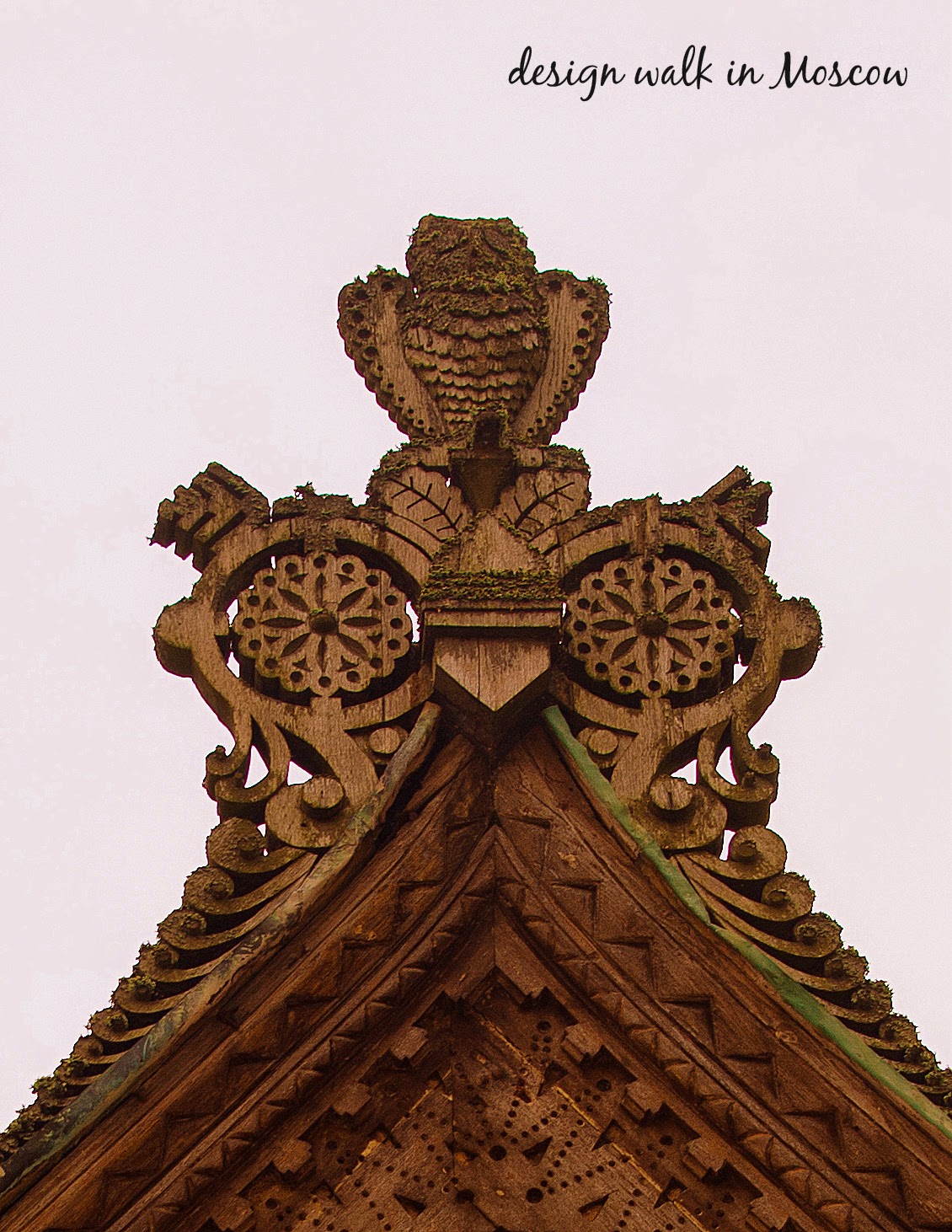
Hi there, I got a bad cold, it's been a long time since my last post. I continue the report from Abramtshevo. This time, you will find a lot of lovely "Owls" in my pictures. Now you see the first one, on the top of the entrance roof.
前回のアブラムツェボ紹介から日が経ってしまいましたが、つづき。
今回は写真の中に、何羽のかわいい「ふくろうさん」を見つけることができるでしょうか?がポイント。さっそく一羽目が見えてきましたよ。ほら、よく見ると玄関屋根のてっぺんに。


Bathhouse (1878) designed by Ivan Ropet

This house is called "Bathhouse" (buit in 1878). The triangle shaped roof is painted in red black check patterns, this fanciful look reminds us of a dwarf house in fairy tales.  This building is definitely the highlight of Abramtsevo museum, designed by Ivan Ropet who was the originator of the Russian Revival in architecture. The decoration above the porch, like a big barrel gives us unique impression,it resembles the old Russian architectures.
この建物はBathhouse (1878年)。木々に囲まれたチェック模様の三角屋根は、まさしくおとぎの国の小人のお家みたい。アブラムツェボ・ミュージアムの中で、間違いなくハイライトでしょう。デザイナーはIvan Ropet, ネオロシアスタイルの第一人者と敬われる建築家です。玄関上の大きな樽上の装飾が、中世ロシアの伝統的建築を想起させます。


The estate owner, Mamontov used this house for the private porpose and later it became a rest house. Its interior is also fantastic. There are two main rooms, one is the dining room with beautiful wooden furniture which is decorated by Russian traditional carving. And I found the cute "owl"design on the lampshade. I wish I could take them my home!! The other room is designed by Ivan Ropet.  It is a perfect example of Russian Design! Every part is carefully carved by Russian traditional way. The log walls and window flames remains original wood color, light beige.  In contrast, the ceiling and the ceramic stove is light blue. This color combination makes this small room something special.
オーナーMamontov氏が私用で使っていたというBathhouse、インテリアも期待を裏切りません。大きく2つの部屋にわかれ、一部屋はダイニングセットのような家具が設置されていますが、そのどれもが美しい純ロシア風の木彫りで装飾されています。そして目をひくのが、可愛らしい「ふくろう」のランプシェード。これは自宅にも飾りたい!
もう一つの部屋は、Ivan Ropetデザイン。完成度の高い「ロシアンデザイン」に圧倒されます。白木っぽい木の壁と窓枠の彫刻は繊細で美しく、天井とペチカの冴えわたったブルーとのコントラストが見事です。細部まで丁寧な仕事ぶりがうかがえます。
The interior of Bathhouse

The interior designed by Ivan Ropet


The Russian famous fairy tale painter, Vicktor Vasnetsov (also see my previous post) left two architectual works in Abramtsevo museum. Firstly, "Hut on Chicken legs"(1883).  This odd idea came from the Slavic fork tale, the supernatural being Baba Yaga usually described as living in the hut on chicken legs. The hut built in Abramtsevo didn't have legs though. The decoration around the roof,  at one side there is the Owl motif, the other side is the Bat, and the roof top crowns the horse head. The second building by V.Vasnetsov is "Church of the savior"(1882). Unfortunately it is being restored now. We could only see the part of beautiful decoration by colorful tiles.

ロシアのおとぎ話を描く画家といえば、Viktor Vasnetsov (過去投稿)。彼のプロジェクトによる建築が2作品ここに残されています。まずはHut on Chicken Legs(鶏の足の上に立つ小屋 1883年)。スラブ民話の妖婆、バーバ・ヤーガが住んでいたのが鶏の足の上に立つ家なのです。実際、アブラムツェボの小屋は足のようにはなっていません。屋根付近の装飾には居ました「ふくろう」!!反対側には「こうもり」。そして屋根てっぺんには馬頭が乗っかっています。V.Vasnetsov2つ目の作品は、救世主教会(1882年)です。残念ながら現在修復中。しかし外壁の一部にみられる色鮮やかなタイルの装飾から、Vasnetsovのこだわりが感じられます。

Hut on Chicken legs(1883), designed by Viktor Vasnetsov
 
V.Vasnetsov's original plan
 
The church of the savior(1882, designed by Viktor Vasnetsov


Lastly I want to show you, "Kitchen"(1870) which was built as the previous estate owner Aksakov's kitchen. The building apperance is not as unique as others, well seen in a sort of forklore museums. However, today it keeps the excellent collection of Russian peasant art works, such as spinning wheels, decorative wooden boxes and so on. The wooden ladles collection is remarkably large numbers and the variety of handle decoration is worth to see.    
最後に紹介したいのはKitchen(1870年)。旧オーナーAksakov氏の台所として建築されました。小屋自体は民俗博物館でよく見かけるような平凡なデザインです。ただ内部の展示物は見ごたえがあります。ロシア農民文化に関するコレクションは、紡ぎ機や飾り箱のバリエーション、保存状態がたいへん良いです。特に木製ひしゃくのコレクションは数が揃っており、それぞれ柄部分のデザインが楽しめるでしょう。


Kitchen(1870)
Russian peasant houseware collection


Abramtsevo, the ideal village created by 19C Russian artists. It is exactly a Russian world in my imagination, more than the real .  It is the wonderland where Russian traditional culture has revived with artists' new ideas. From Moscow, it takes only 2 hours by train, visit and say 'Hi' to these cute owls, they always welcome you.
19世紀のアーティスト達が作り上げた理想郷アブラムツェボは、現実のロシアより「ロシアらしさ」が凝縮されており、異国から来た私を満足させてくれました。アーティスト達が、伝統を模しながら遊び心を持ってアレンジしたような不思議の世界です。愛嬌のある「ふくろうさん」たちに、ぜひ会いに行ってください。


For your information:
Abramtsevo state cultural establishment artistic and literary museum-reserve
English guide is available, but advance booking is necessary.
address
141352, Московская обл., Сергиево-Посадский муниципальный район,
 городское поселение Хотьково, c. Абрамцево, ул. Музейная, д. 1


15 Oct 2014

Abramtsevo- Russian artists village in 19C.

We are having a pleasant time, " Golden Autmun".  The natural leaf patchwork of yellow, orange and red looks so fantastic, it lasts only for a week though. Honestly Russian autumn is too short, but it is like a beautiful gift before long winter comes. In this season, just to walk around the city is good enough, but I wanted to drive outside of Moscow and visited the small village called "Abramtsevo".
モスクワは黄金の季節を迎えました。黄色、橙色、朱色が織りなす木々のパッチワークを楽しめるのはほんの数日。それでも街がモノトーンになってしまう長い冬の前、最高のプレゼントです。モスクワ市内の散歩もいいけれど、金色の大地をドライブしてみるのも素敵。私達はモスクワ近郊の村、アブラムツェボを訪れました。

On the way to Abramtsevo, beautiful Dacha village.
 Abramtshevo is about 70km north from Moscow, nearby Sergiev Posad. This small village is visited by many tourists, because it is well known as the art village where the famous Russian artists gathered in 19th century. Originally this estate was founded in the 1750s, and changed several owners, and at the end of 1843 was bought by the Russian writer Sergiev Aksakov. His son, Konstantin was known as a ideologue of Slavophilism, asserted that Russia should follow its own way , different from the Europian one. Sergiev Aksakov supported his son's idea and welcomed the adherents of this movements in his house in Abramtsevo. Also he were visited by artists, actors and writers, such as Young Turgenev and N.V.Gogol and so on.
In 1870, the industrialist S.I.Mamontov owned this estate. Mamontov himself has multi talents, loved art, supported the life of talented people. He initiated the creation of an artistic union in Abramtshevo that consisted of young V.D.Polenov, brothers Vasnetsov, I.E.Repin, M.A.Vrubel and others. All of them were united by the wish to incorporate their creative work in to the Russian life-nature,people, folk tales. In Mamontov era, Russian style new buildings appeared and gave more attractive look to the village.
アブラムツェボ村は、モスクワから北へ約70km、セルギエフ・パサードの手前に位置します。この小さな村が観光スポットである所以は、19世紀にロシアの名だたるアーティストを擁する芸術家村であったからです。その歴史をさかのぼると、アブラムツェボは1750年代にはじめて私有地化された後、数人の所有者の手を渡りながら、1843年末に作家としても有名なSergei Aksakov氏により買収されました。彼の息子Konstantinはスラブ主義(反欧化、ロシア文化復興)の推進者として知られ、父S.Aksakov氏はこの思想を援護しアブラムツェボの地にスラブ主義の支持者を招きました。また芸術家、俳優や作家との親交も深く、若き日の作家ツルゲーネフ、ゴーゴリなどもこの地を訪れたといいます。
1870年、アブラムツェボは実業家S.I.Mamontov氏によって買収されました。Mamontov氏は芸術を愛し、才能あるアーティストの生活を援助したいとの考えから、アブラムツェボに芸術組合を創設しました。後に有名になるV.D.PolenovVasnetsov兄弟I.E.Repin、M.A.Vrubelなどの才能豊かなアーティストが”アブラムツェボ派”として輩出されました。彼らの志は一つ、「創作活動を、ロシアらしい生活-自然、人々、民話に融けこませていくこと」。Mamontov氏の時代には「ロシアン・スタイル」を継承する建築物も加わり、村はますます魅力的に彩られました。

Entrance of Abramtsevo state historical art and literary museum
The entrance ticket and guide map
このチケットと案内地図のデザインがまず可愛い。。
 
If you want to learn about S.I.Mamontov who made this unique art village in Abramtsevo, I recommend to join the excursion including "Manor house" where Mamontov's work room and family rooms are preserved as they lived. His wife, Yelizaveta's room is a must see spot, because it is equipped with beautiful Russian style furniture. Also the dining room has nice interior, wood carved furniture and Vrubel's ceramic works are perfectly matching.

アブラムツェボをユニークな芸術村に仕立てたMamontov氏の功績を学ぶには、ガイドツアーに参加し、マナーハウスを訪れることをおすすめします。内部には氏の書斎や家族の部屋がそのままに保存されています。特筆すべきは、妻Yelizavetaの部屋とダイニングルーム。妻の部屋はロシア古来のアート、木彫りがふんだんに施された美しい家具を見ることができます。ダイニングルームは、木彫りの家具とVrubel作のペチカや花器が見事に調和したインテリアを楽しめます。
 
Manor house (Late 18th centruty)
Mamontov's wife's room, nicely decorated with Russian wood carving.


The dining room
Vrubel's work is a good accent of the interior
 
Behind the Manor house, there is the lovely house with a triangle roof top. This house is called "Studio", built by the painter/architect Victor Gartman in 1873. The design concept is obviously Old Russia, wood carved decorations on the roof and the windows copied the traditional peasant works.  Inside of the house, the natural light comes from the wide windows, it makes the space more open. There we can see some paintings of Abravtshevo artists and Vrubel's ceramic works as well.
マナーハウスの後方に、三角屋根の可愛らしいお家が見えます。Studioです。1873年、画家/建築家のVictor Gartmanのプロジェクトにより建てられました。屋根や窓の木彫りは、ロシア伝統の農民文化を模しているのでしょう。内部は大きな窓からの自然光に照らされ、開放的な雰囲気。アブラムツェボ派の作品や、Vrubel作の美しいペチカが展示されています。
Studio(1873)
The roof and window decoration follows the Russian traditional way
 
 
Vrubel's ceramic stove
 
In the backside of the Studio, we found the interesting object in the glasscase. That is called "Vrubel's Bench", created by Vrubel and other artists in 1915. It stands on the high place surrounded by trees, looks like a special seat to see beautiful autumn.
Studioのさらに奥にぽつんとガラスケースに入ったオブジェが飾られています。これは「Vrubel's Bench」と呼ばれ、Vrubelと仲間のアーティスト達により1915年に創られました。少し高台に設置されたベンチは、美しく黄葉した木々を眺めるための特等席のようでした。

Vrubel's bench (1915)
 

My report of Abramtsevo will be continued.
アブラムツェボの素敵な建築&インテリアは、次回に続きます。。