19 Sept 2014

Dacha -The Russian summer house-

Time is flying, it's already autumn. In September, Moscow has been warm and my winter jacket is still in the closet. I need to write down some beautiful summer memories before it gets cold.  This summer was really special, because finally I experienced the stay at the "Dacha"( Russian summer house). It was 4years ago, when my husband was transfered to Moscow, firstly I bought a travel guidebook of Russia and secondly I bought the book about Dacha. From this book, I leaned that Russians spend summer weekend at their own summer house called Dacha. Since then, I have been dreaming about it.
忙しくしている間に、もう季節は秋です。夏の終わりが早いモスクワも、9月はまだ暖かい日が続き、本格的な冬用ジャケットなしで過ごせるほどです。夏の名残があるうちに、どうしても書きとめておきたいことがありました。それは今夏、ついに経験できたダーチャ(ロシア版サマーハウス)についてです。なにしろモスクワ駐在が決まった4年前、私が真っ先に購入した本は「地球の歩き方」とこの本だったのですから・・。ロシア人はなにやら週末、別荘で暮らすらしい。「ダーチャ」その心地よい言葉の響きが、やけに印象的でした。

The book about Russian Dacha life, published in Japan
「ロシアに学ぶ週末術 ダーチャのある暮らし」(WAVE 出版)
 

"Dacha" is originally from the word "дать" [dat'] - "to give", which is the land given by the government in Soviet era. After Soviet Union collapsed, it was privatised and now owners can trade it freely. According to that book, 70~80% of Moscow citizens own Dacha, the typical land size is about 600square meters. An owner builds the house and cultivates the land to grow veges and fruits, spends relaxing time with the family. In summer season, Moscow city is quieter at weedned, because most of people already get out of the city to their Dacha. This summer my friend invited me to her Dacha and my dream came true.
「ダーチャ」とはソ連時代に国から一般市民へ無償で与えられた郊外の土地(現在は私有化され、売買されている)。この本によると、モスクワ市民の7~8割がダーチャを保有。一般的な土地面積は600平方メートル(約180坪)。そこに家と畑を設営し、自給自足しながら自然の中でゆっくりと余暇を楽しむのがロシア流。交通渋滞がひどいモスクワが夏に静かになる理由は、金曜日ともなると皆こぞってダーチャへ出かけてしまうからなのです。今回、知人の誘いでついにダーチャ・ステイを実体験できることになりました。

A scenery in the Dacha village
About 3-hour -drive from Moscow city, our car got into the unpaved bumpy road and finally arrived at the destination. Later my friend told me that no one could get there by themselves, so we did a good job. My friend's Dacha was....very modern than my expectation, however inside the house, it was like a construction site. I was never surprised, because I already knew that Dacha is basically never completed, the owner enjoys building and living at the same time. In my friend's case, the house has been constructed for 8~9 years and this summer they finally completed the kitchen. Nowadays most of Dacha have the water, electricity and gas supply, but some decades ago there wasn't any of those. People got water from wells and made fire to heat. The life was very primitive and natural.  Still now the shower system remains the old way.
モスクワ市内より約3時間、車は舗装されもしない道なき道へ入り込み、知人のダーチャへたどり着きました。思ったよりモダン・・です。でも一歩入れば、そこは工事現場さながらです。でも驚きはしません、これも例の本で予習済みでした。基本的に住宅は、家主の手づくり!ダーチャの醍醐味は「作りながら住むこと」だそうです。知人の家も作り始めてから今年で8~9年、やっとキッチンが完成したところだそうです。今でこそ、水、電気、ガスは通っていますが、一昔前まではそのようなライフラインはないのが当たり前。すべて原始的な方法、例えば井戸、火を使って生活していたそうです。シャワーの仕組みは、今でもとってもナチュラルです。


My friend's Dacha house

Interior is underconstruction(lower left), Shower system is simply to keep natural heated water on the roof. (lower right)


In my friend's Dacha site, there is the old hut where the grandfather has been living for a long time.  I found that the room was cozy with rustic interior such as the handmade stove, hanging old textiles on the wall and well-used household items.
知人のダーチャの敷地内には、おじいさんが昔から住んでいる小屋もありました。手作りのペチカ(ストーブ)、何十年と吊るされているであろうカーテン、暮らしの道具一つ一つに味わいが感じられます。

Grandfather's hut

Interior is rustic and cozy.
The Russian style stove made by the Grandfather.

Dacha is also the best place for urban children to learn nature, because it is usually surrounded by forests, rivers and  ponds. For both children and adults, Dacha life is so adventurous that they can meet the wild life, listen to insects sounds at night, play in a river, eat wild berries and mushrooms in season. It's a perfect vacation.
都会暮らしのモスクワっ子にとって、ダーチャは自然を学ぶ絶好の場所でもあります。すこし歩けばそこは、森、川、池。無数の野生動物と出会い、虫の鳴き声に耳をすまし、水遊びして、野いちごやキノコなどの自然の恵みをいただく。子どもも大人も、毎日が大冒険、なんて贅沢な休暇でしょう。

Dacha village is usualy surrounded by forests, rivers and lakes.
 

The relationship with neighborhoods is much closer than the one in Moscow.  When we walked around the village, the neighborhood man just stopped gardening work and greeted us in a friendly way. His house is a typical traditional Dacha which has a triangular log house with beautiful garden.  His wife is keen on handicrafts and decorates the house nicely.
モスクワ市内のアパート暮らしとは一味ちがう、ご近所づきあいも魅力です。通りがかれば菜園作業の手をとめて、「やあ」なんて気楽に声をかけてくれます。知人が紹介してくれたご近所さんは、正統派ダーチャ。三角ログハウス風のお家と庭一面に広がる美しい花壇、菜園。クラフト好きな奥様の趣味を生かした、インテリアも素敵でした。

A typical Dacha.
Nicely decorated by handicrafts


The end of our stay, we enjoyed Russian BBQ called "Shashrik". The host grilled the meat with old iron bars made by his father. The beautiful sky and pleasanat breeze made our dining fantastic! It was unforgettable tastes of Dacha, the memory of Russian summer.
一日の締めは、なんといってもシャシリク(ロシア版BBQ)。おじい様手作りの鉄串で、豪快に肉を刺して焼きます。北国独特の透き通るような空の下、さらさらした草原の風を感じながら、皆で囲んだシャシリクの味は格別で、また一つ忘れがたいロシアの思い出が増えた夏でした。
 
The host prepared Russian BBQ(Shashrik)


29 Aug 2014

Kizhi island 3- Beautiful peasant life

In my last post, I wrote about the Kizhi pogost. Many of visitors spend a lot of  time there and rush to see the rest of exposition, however the greatest attraction of Kizhi is that the old villages(18-19Century) are restored and located all over the island. We can experience the old Russian/Karelian life as if we lived. Today I show you how beautiful the north Russian peasant life is.
前回はキジ島一番の見どころ、木造教会について書きました。ほとんどの観光客は教会群を見るのに精いっぱいで、他の建築物は急ぎ足になってしまいます。でもキジ島の本当の魅力は、島全体が野外民族博物館であること。18~19世紀の村が見事に再現され、当時の人々の暮らしをリアルに体感できるのです。今回は北方ロシアの美しい農民文化についてお伝えしようと思います。

The Kizhi pogost and Zaonezhie village
Zaonezhie village
 
Firstly I went to the sector "Zaonezhie village" nearby the Kizhi pogost and found the big building, The house of peasant Oshevnev(1876). This is the traditional Zaonezhie house with the living and working quarteres built under the same roof. In the severe northern climate, it is a smart design that makes possible for the family to work without going outside. The house is built of pine logs, the exterior is traditional carved details of the balconies, windows and the roof. This outlooking reminded me of Russian fairy tale.  From the porch, there were a couple of doors and the tiny stairs leads to the second floor. I entered the lower living room, there were the big white stove, old wooden furniture and linens hung on the wall. I like this simple and warmful interior.
まずは木造教会群のすぐそばにあるZaonezhie地域の村へ。一番に目をひく大きな建物、農民Oshevnevの家です。(1876年)この地域伝統の建築様式、住空間と農作業場がひとつ屋根の下で一体となっているのが特徴です。外に出ずとも農作業できるという極寒地ならではの知恵ですね。丸太を組んだ外壁にはたくさんの窓。窓枠やバルコニー、屋根の周りは美しい木彫りで装飾されています。ロシアのおとぎ話そのままの世界に心ときめきます。玄関に入ると、2~3のドアと2階への階段。まずは1階の大きなリビングルームへ。大きな白いペチカと、使い古した木の家具たち、さりげなく掛けられたリネン。質素だけれど暖かみのあるインテリアです。

The house of peasant Oshevnev(1876)
 
When I was dreaming of the old Russian life, I heard the peculiar sound. The woman demonstrated weaving in the traditional folk costume. In Kizhi island, we can see craftsmen demonstrating traditional village crafts, such as spinning, weaving and stitching. They demonstrated so naturally without any overaction or forced smile, so visitors kept calm not to disturb them.
当時の暮らしに想いを馳せていると、カタンカタン・・と機織りの音が。そう、ここではスタッフが伝統衣装を着て、糸紡ぎや機織り、刺繍などの昔の手仕事を再現しているのです。大げさな演技などなく、愛想もなく、ごく普通に暮らしているかの如くですから、見ている私たちの方が「お邪魔しました~」と少々きまりの悪い思いをするかもしれません。
Weaving
Spinning
Russian embroidery
 
 
Then, I visited the sector "Pryazha village", which is the exposition of Karelian's culture. The house of peasant Yakovlev(in the late of 19century) is remarkable. The house is also big and looks similar to Oshevnev's house, but there are some differences. For example, it has partitions divide the house more symmetrically and the interior has traditional rules to be situated. On the upper floor, there were womens in Karelian traditional costumes singing cheerful folk songs while they work. Their faces look peaceful with natural smile, telling me how to enjoy the life.
つぎにPryazha地域の村へ。ここはカレリア人の文化遺産となります。見どころは、農民Yakovlevの家。こちらも大型の住居で、前述のOshevnevの家と良く似ていますが、より左右対称なレイアウトやペチカの位置などにカレリア文化の独自性があるそう。楽しげな歌声に誘われて2階へあがると、伝統衣装を着た女性たちが、編み物などしながら民謡を歌っていました。その自然な表情が、人生をゆったりと大らかに楽しむカレリア人の生活すべてを物語っていました。

The house of peasant Yakovlev (the late of 19century)

Karelian women sing folk songs while they work
The Kizhi island was bigger than my expectation, I spent two days, but it was not enough to see the whole land. On the second day, I tried to walk to the north. There were few tourists and I could see the fantastic secenery like, small villages located in the wide streched grass, the small church and windmill on the hill, the cross on the road. I felt like that I was in the memory of my childhood or in a fairy tale.
それにしても広いキジ島。私は2日間訪れたのですが、とても全ての村を見ることはできません。2日目、残った数時間で少し北上してみました。南北の中間地点まで来ると、観光客の姿はほとんどありません。さらさらと風にゆれる草原に点在する村、丘の上に建つ小さな教会や風車、道中に祭られた十字架。なんだろう・・なにか懐かしいような、絵本の中にいるような。不思議な感覚にとらわれました。


Before leaving, the weather turned into chilly cloudy even in Summer. I bumped into the girl who had just finished her work, she was accrossing the path. Her old blue dress made a nice contrast with the gray sky. Suddenly this scenery overlapped my image of old Russia.  I experienced the wonderful trip to meet the original Russia which I have been seeking.
最後は少し天候が崩れ、夏だというのに寒そうな曇り空。そこに家路を急ぐ少女が横切りました。さっきまで糸紡ぎを手伝っていた少女です。グレイな空を背景に、鮮やかなブルーの古めかしいワンピース。ああ、これこそロシアの原風景だな・・と直感的に感じました。モスクワに住み始めてからずっと、探し求めたロシアに出会えた旅でした。


13 Aug 2014

Kizhi island 2- The Kizhi pogost

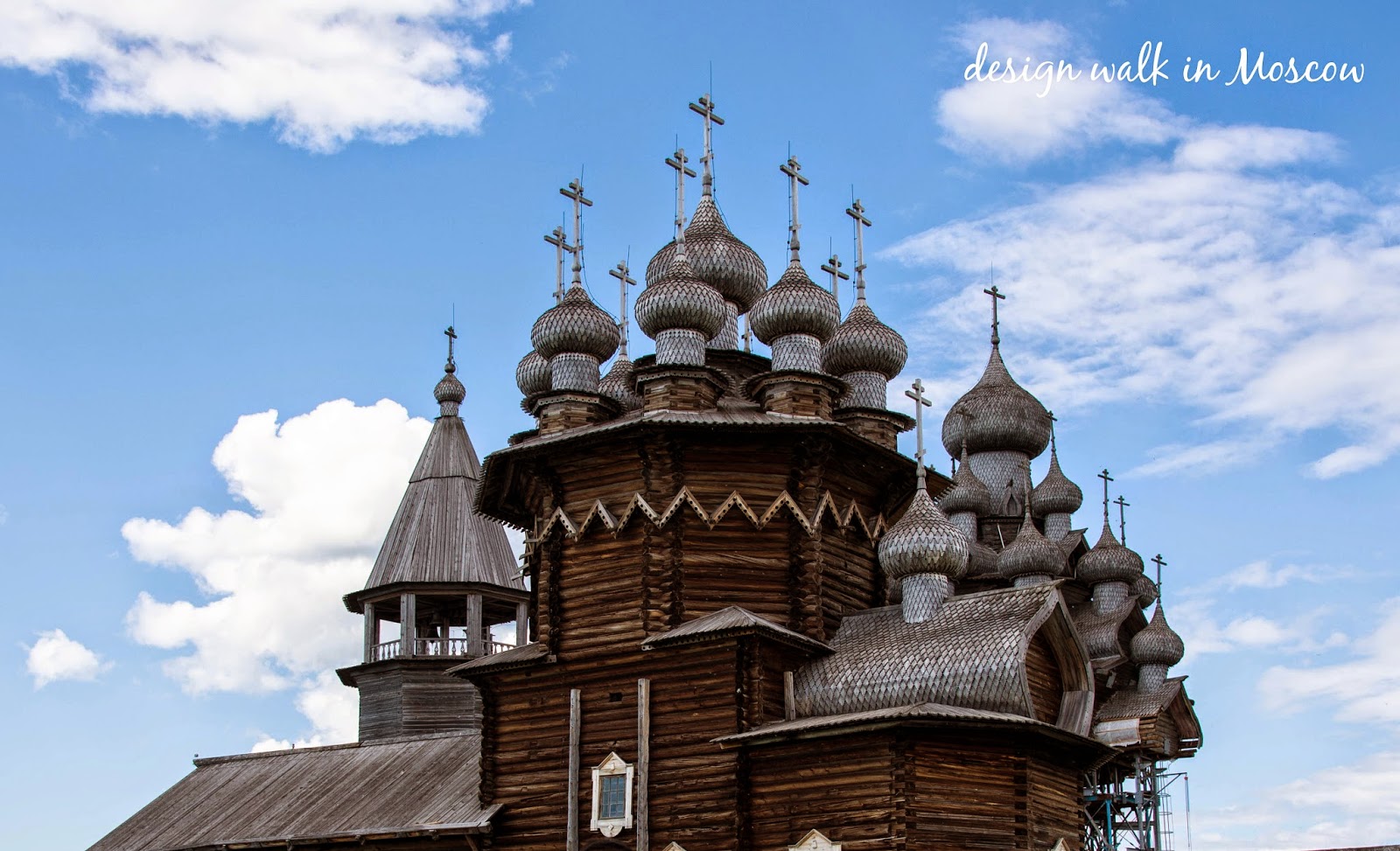
The southern part of Kizhi island have two exposition sectors, "Russians of Zaonezhie" and "Pryazha Karellians". The former sector is the main one including Kizhi pogost.  " Zaonezhie" is the name of the land on the western shore of Lake Onega and this sector shows the traditional culture of the Russians of Zaonezhie. The Kizhi pogost is located in15 mins walk from the port. This unique complex consists of three parts, the 22-domed Church of the Transfiguration for summer use,  the 9-domed Church of the intercession for winter use and the bell tower. They had been formed gradually for two centuries (17th-19th) and now on the list of UNESCO.
キジ島南部は、二つの展示エリアにわかれます。「Zaonezhie地域のロシア人」と「Pryazha地域のカレリア人」です。前者は島内メインの見どころで木造教会群が含まれています。「Zaonezhie」とはオネガ湖西岸の土地の名前に由来し、この地域に住むロシア人文化について展示されています。港から15分ほど歩き、木造教会群へ到着しました。この不思議な建築群は、3つの建物で構成されています。22個のドームをもつ夏用教会、顕栄聖堂(プレオプラジェンスカヤ教会)と、9個のドームをもつ冬用教会、生神女庇護聖堂(ポクローフスカヤ教会)、そして鐘楼です。これらは17世紀から19世紀、2世紀にわたり徐々に形づくられ、現在はユネスコ世界遺産に登録されています。

The Kizhi pogost
Approach to the Kizhi pogost
 The most famous building, The church of the Transfiguration(1714) turns 300years old this year! It is just amazing that this wooden church remains in a harsh northern climate and did not experience any major repairs since the moment of construction. However, the log walls were seriously worn out and finally restoration work had started in 2004. Now the work is still going on and some parts of walls are missing, but it would never disappoint you.  All visitors would be surprised and wonder who could create this incredible architecture 300 years ago! In fact, there is no information about the builders and no contracting records have been saved but considering the proportions of the building and historical analogues we can assume that it was constructed by a team of 75 carpenters during several years. Remarkably this church were fixed without nails, only the aspen shingles were nailed to the domes.
いちばん有名な建築プレオプラジェンスカヤ教会(1714年設立)は、今年でなんと300歳!ロシアの北端のきびしい気候の中、吹きさらしで、今まで大がかりな改修工事もされていなかったというから驚きです。しかし丸太でできた壁の老朽化は深刻で、ついに2004年より修理が施されることになりました。工事は進行中で、現在も丸太壁の一部が抜けている状態ですが、訪問者はけっしてがっかりすることはないと思います。いったい誰がこんな変わった建物を創ったのだろう・・・驚きながら300年前に想いを馳せることでしょう。実際はすべてミステリーなのです。建築士や施工の記録はなく、建物自体や歴史的検証から推測すると75人くらいの大工のチームで数年にかけて建てられたものと考えれています。さらに驚くべきことにはこの教会は釘なしで建てられているそうです。(ドームにはりつけられている板以外)
The church of the Transfiguration(1714)
 

The structure of the dome
As following the traditions, next to the unhearted summer church, there is a warm heated winter church, The church of the Intercession of the Virgin Mary(1764?). In contrast to the round church of the Transfigration, the church of the Intercession has a rectangular layout and a pentagonal top with 9domes. We can enter this church and see the exhibition of old icons and iconostasis, transferred from other churches or neighboring villages.
伝統に従い、暖房機能のない夏用のプレオプラジェンスカヤ教会のとなりには、暖房機能を備えた冬用教会が建てられています。生神女庇護聖堂(ポクローフスカヤ教会 1764年設立?)です。丸い輪郭のプレオプラジェンスカヤ教会に比べ、ポクローフスカヤ教会は長方形の設計、そこに9つのドームをもつ五角形の塔がついています。この教会は現在も入室可能で、内部には古くからのイコン画やイコノスタシス(イコンで覆われた壁)が展示されています。これらは島内の他の教会や、周辺の村から移設されたものです。

The church of the Intercession of the Virgin Mary(1764?)

 
Iconostasis of the church of Intercession(17th centruty)


The final element of The Kizhi pogost is the bell tower(1862). Compared to other two buildings, it looks simple and sober, but it also has unsual structure. Instead of traditional low basement quadrangle and a high ostahedron, it has a massive quadrangle and a low ostahedron crowned with a steep roofed bell tower. The simple shilhouette emphasizes other two churches and the massive lower quadrangle shape harmonizes with the lower proportions of the churches.
キジ木造教会群、残りのひとつは鐘楼です。(1862年設立)他の建築に比べ、一見シンプルで地味にも見えますが、やはり特別な構造で建てられています。伝統的には、高くない正方形の低層部に、高さのある八方形の上層部が重ねられます。でもこの鐘楼の場合は、とても大きな正方形の上に、低い八方形が重なり、その上に尖がり屋根の鐘楼がのっかっているのです。すっきりとしたシルエットは2つの教会を際立たせ、また低層部のどっしりとした正方形は、教会の低層部と釣り合いがとれ、うまく調和しています。

The bell tower(1862)
 Kizhi architectural ensemble 


 From any directions Kizhi architectural ensemble gives us wonderful impression, thus it is meant to be the symbol of this island. The three buildings harmonize perfectly and become the one, it is like the Trinity.
どの方角から見ても、キジ島木造教会群は印象深く感動を与えてくれます。他のどんな場所にもない、この島独自のシンボルでしょう。3つの建築はそれぞれ個性的だけれども、見事に調和し、ひとつの崇高な姿を見せてくれています。それはキリスト教における三位一体さながらです。

 
For your information:
The Museum on Kizhi Island
http://kizhi.karelia.ru/info/en/about/the-museum-on-kizhi-island/